
Choosing the right skip size sounds simple — until you realise how easy it is to overpay for space you don’t use or order a skip that’s too small for the job.
Whether you’re clearing a house, renovating, or tackling a garden project, picking the right skip size can save you time, money, and hassle.
This guide breaks down:
-
The difference between small and large skips
-
What each size is actually used for
-
Common mistakes people make
-
When skip hire isn’t the best option at all
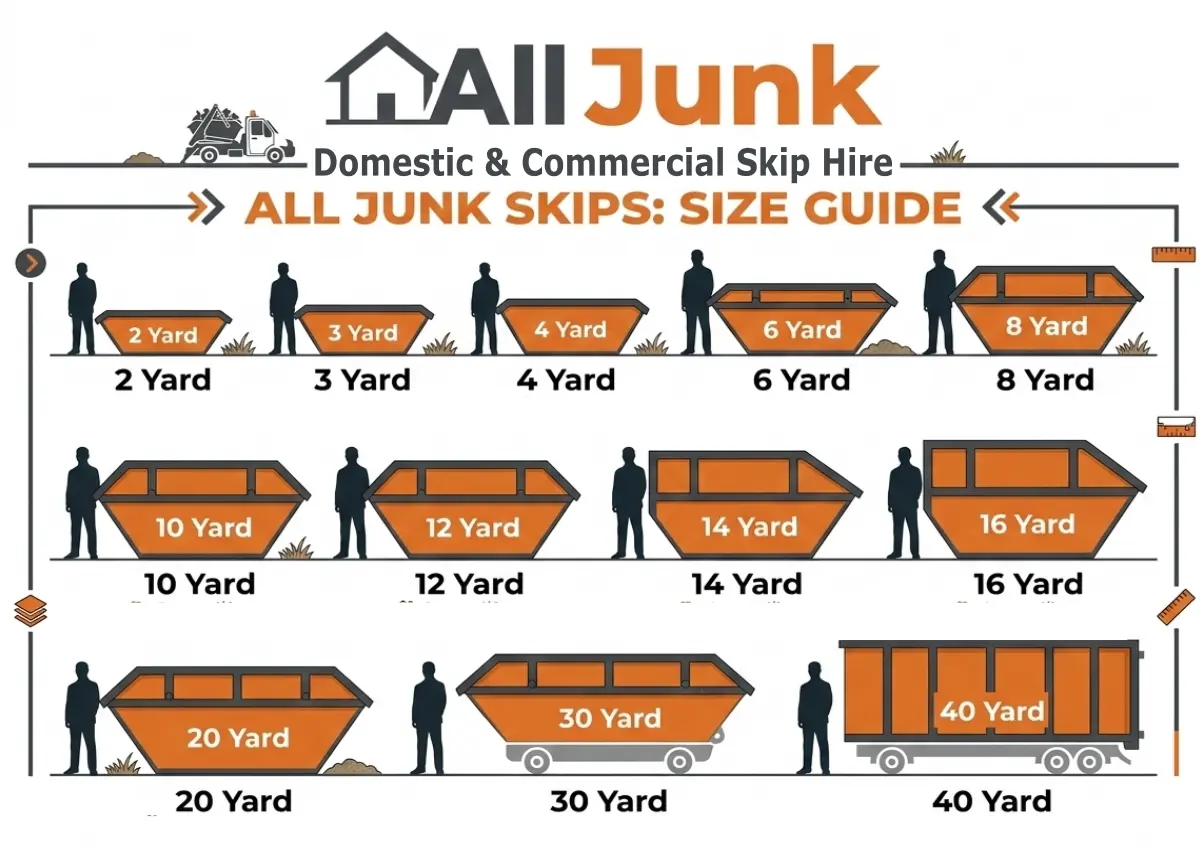
Understanding Skip Sizes (Quick Overview)
Skip sizes are usually measured in cubic yards.
Here’s a simple breakdown:
Small Skips (2–4 Yard)
Best for:
-
Small clear-outs
-
Garden waste
-
DIY projects
-
A few bulky items
Capacity:
-
Roughly 20–40 bin bags
Medium Skips (6–8 Yard)
Best for:
-
Kitchen or bathroom renovations
-
House clearances (partial)
-
Larger garden projects
Capacity:
-
Around 50–80 bin bags
Large Skips (10–12 Yard+)
Best for:
-
Full house clearances
-
Construction waste
-
Major renovation work
Capacity:
-
100+ bin bags
How to Choose the Right Skip Size
The right skip depends on more than just how much waste you have.
1. Type of Waste
Heavy materials like soil, rubble, or bricks fill skips quickly and may be restricted in larger skips.
Lighter waste (furniture, packaging, general rubbish) takes up more space but weighs less.
2. Space Available
Do you have room for a skip?
In areas like:
-
Surbiton
-
Kingston
-
Wimbledon
…space can be tight, especially on residential roads.
If the skip needs to go on the road, you may need a permit, which adds cost and delay.
3. Duration of Hire
Most skips are hired for several days.
If your project is quick, you may be paying for time you don’t actually need.
4. Access & Loading Effort
With a skip, you do all the work:
-
Lifting
-
Carrying
-
Loading
This can be time-consuming — especially with heavy or bulky items.
Common Skip Hire Mistakes
Many people make the same costly errors:
❌ Ordering too large “just in case”
❌ Paying for unused space
❌ Underestimating how much waste they have
❌ Forgetting permit costs
❌ Not considering access restrictions
❌ Realising too late they can’t lift heavy items
These mistakes can easily turn a “cheap skip” into an expensive one.
When Skip Hire Isn’t the Best Option
Skip hire works well for ongoing projects — but it’s not always the most practical solution.
It may not be ideal if:
-
You only have a small or medium amount of waste
-
You need everything gone quickly
-
You can’t do the heavy lifting
-
You don’t have space for a skip
-
You want to avoid permits and delays
The Alternative: Wait & Load Clearance
Instead of guessing skip sizes, many homeowners now choose professional waste clearance services.
With a service like All Junk (alljunk.co.uk):
✔ You don’t need to choose a skip size
✔ You only pay for what’s removed
✔ No permits required
✔ No lifting or loading
✔ Same-day service available
✔ Waste is sorted and recycled responsibly
It’s often faster, easier, and more cost-effective — especially for house clearances and bulky waste removal.
Skip Hire vs Clearance: Real Comparison
Skip Hire
-
Fixed size pricing
-
You load everything
-
Permit may be required
-
Takes up space
-
Can sit for days
House Clearance
-
Volume-based pricing
-
Full labour included
-
No permits needed
-
Quick turnaround
-
Everything removed in one visit
For many residential jobs, clearance simply makes more sense.
Areas We Cover
If you’re considering skip hire or an alternative, All Junk provides waste removal across:
-
Tolworth
-
Wimbledon
We regularly help customers who initially considered a skip but chose a faster, easier solution.
Not Sure What You Need? Get Advice First
One of the biggest advantages of using a clearance service is you don’t have to guess.
We can quickly assess:
-
How much waste you have
-
The best removal method
-
A fixed price upfront
No guesswork. No wasted money.
Get a Fast, Fixed Quote Today
If you’re unsure whether you need a small skip, large skip, or something else entirely, we’re here to help.
Visit alljunk.co.uk or contact our team for a free, no-obligation quote.
We’ll recommend the most cost-effective option — even if that means not using a skip at all.
Save time. Save effort. Avoid overpaying.